Your story doesn't need creating. It needs finding.
You know you're good — you just can't explain why to the people who haven't hired you yet.
You open LinkedIn. Someone with half your experience just announced a major contract.
You close LinkedIn, feeling that familiar mixture of frustration and resignation.
You sit down to write about your work.
Stare at the blank page. Type something professional and forgettable. Delete it. Try to “add personality.” It feels fake.
Delete that too.
You know you’re good at what you do.
You just can’t explain why.
And underneath all of it, there’s this nagging thought you barely admit to yourself:
“Maybe my background isn’t interesting enough. Maybe there’s nothing special here. Maybe I’m just… ordinary.”
That thought — right there — is what’s keeping you stuck.
Not because it’s true.
But because you can’t see what’s actually there.
The Story You're Telling Yourself
You've convinced yourself the problem is time. Or skill. Or knowledge.
"I just need to learn how to write better content."
"I need to figure out LinkedIn."
"I need a content strategy."
But that's not actually what's stopping you.
What's stopping you is this story:
"I don't have anything interesting to say. I grew up in a boring town, worked for dull, grey corporates. I make sensible decisions. I work hard. No one is interested in that"
And because you believe that, you do one of two things:
Option One: You default to corporate speak. "Strategic operational transformation consulting for mid-sized manufacturing firms." Professional. Safe. Completely forgettable.
Option Two: You try to manufacture something interesting. You attempt vulnerability. You force personality. It feels like wearing someone else's clothes. You read it back and cringe.
So you stay stuck.
Not because you can't write.
Not because you don't understand marketing.
You’re trying to create positioning instead of discovering it. The story is already there. You just can’t see it because you’re living inside it.
The Real Problem
You’re not failing because you don’t know how to market yourself. You’re failing because you don’t know what makes you different.
Every time you sit down to show your value, you draw from what you think matters: your qualifications, your experience, your methodology, your results.
These things do matter. But they’re not what makes you different. Everyone and their dog has qualifications.
What makes you different is the journey that led you here. The context that shaped how you think. The background that gives you a perspective others don’t have.
You just can’t see it yet.

You look at the people who are visible and assume their story is more interesting than yours. It isn’t. They just have distance from it. You can’t see yours because you’re standing inside it.
And here’s what you’re missing: your “ordinary” background isn’t a liability. It’s precisely what your clients need.
Twelve years inside organisations like the ones you now consult for isn’t a CV line. It’s credibility no one can manufacture. You don’t just understand the theory. You sat in those rooms. You felt that resistance. You know what actually happens when the consultant leaves and the real work begins.
That’s not ordinary. That’s exactly what makes you the right person.
You just can’t see it yet — because when you’re living inside a story, you can’t read it.

Why You Think You're Ordinary
What Happens If You Don't Fix This
The real cost isn’t the lost revenue. It’s this:
Year One: You keep trying different tactics. Content calendars. LinkedIn strategies. Newsletter platforms. Nothing sticks because you still don’t know what to say. The problem isn’t the tactic. It’s that you don’t have clarity on your positioning.
Year Three: You stop trying. Not consciously. You just… stop. You tell yourself you’re too busy with client work. But the truth is, you’ve given up on figuring this out. It’s too hard. Too confusing. Too vulnerable.
Year Five: You’ve stopped trying. LinkedIn feels pointless. You scroll past other people’s posts without engaging. It’s easier not to look.
Year Ten: Your father worked forty years at Rolls-Royce. Retired with a carriage clock. All his expertise evaporated. Nobody wrote it down. Nobody passed it on.
You’ve spent your entire adult life trying not to become him.
And yet here you are, following exactly the same path.
Quietly competent. Quietly invisible. Quietly running out the clock.
That’s the real cost.
Not the money.
The legacy you never built. The impact you never had. The platform you never created. The book you never wrote. The methodology you never named. The juniors you never taught. The industry you never influenced.
All because you couldn’t see that your “ordinary” background was actually extraordinary.
And you never found someone who could show you.


The Life Timeline Exercise
In our first session, we break your life into chunks—three to seven year periods—and we excavate each one.
Not just professional highlights. The formative experiences. The challenges. The mentors. The victories and defeats. What you learned about yourself.
And here's what happens:
You start seeing patterns.
Common approaches across seemingly unrelated experiences. Turning points that shaped your methodology. Transferable skills you've never articulated. Values that have driven you since childhood.
That History degree you never mention? That taught you to analyze, to identify what actually matters. That's not irrelevant—it's foundational to how you work.
Those toxic corporate years? That's why you understand organizational politics better than consultants who've only ever worked for themselves.
Your father's forty years at Rolls-Royce? That's your shop floor credibility that no MBA can replicate.
We're not inventing a story. We're uncovering what's been there all along.
Here's What You Actually Need
You don't need another marketing course.
You don't need a copywriter to write content that sounds nothing like you.
You don't need a brand strategist with fill-in-the-blank templates.
You need someone to show you the story you can't see in yourself.
That's it. That's the whole thing.
Everything else—the messaging, the content, the positioning, the confidence to show up—all of that flows from finally seeing your own story.
But you can't see it alone.
Not because you're not smart enough. You're plenty smart.
Not because you don't have a story. You absolutely do.
But because you're standing inside it.
And no one can see their own story from the inside.
This is why all the marketing tactics haven't worked. This is why the courses and the templates and the frameworks haven't helped.
You've been trying to create positioning when what you needed was to discover it.
Discover Your Story (No Need To Invent One)
Here's where most positioning work goes wrong:
It starts with the market and works backwards.
"What does your ideal client want to hear? What pain points should you address? What transformation should you promise?"
Then they help you construct a narrative that fits that market position.
It might be effective. It might even be true.
But it won't be you.
It'll be a version of you optimized for positioning. And every time you use it, you'll feel that slight dissonance—the gap between who you are and who you're pretending to be.
I do the opposite.
I start with you. Your actual history. Your actual experiences. The actual path that led you here.
Then we find the market positioning that's already there—embedded in your experience, waiting to be articulated.
I'm not going to help you fabricate a narrative.
I'm going to help you uncover the positioning that's been there all along.
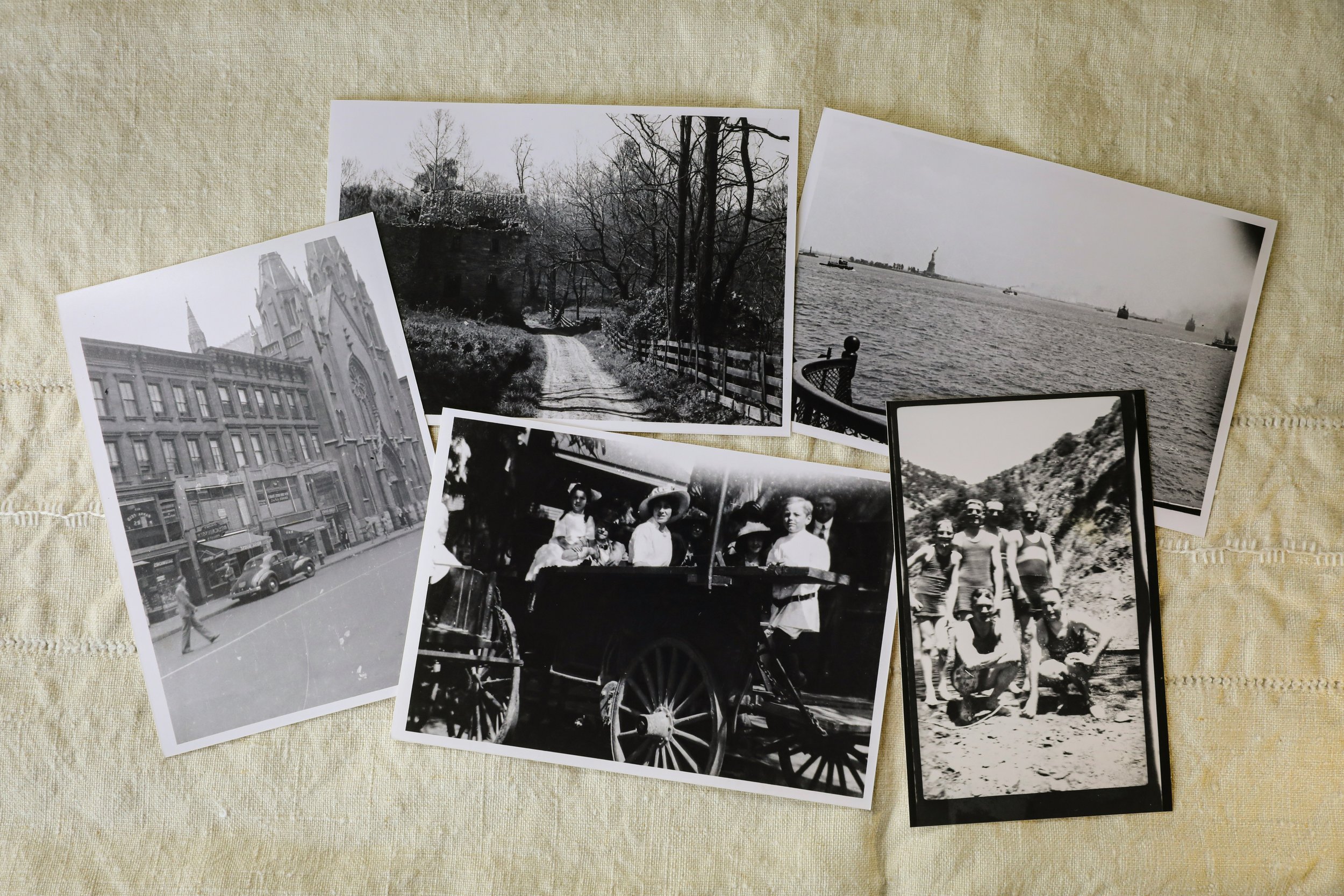
Why You Can't Do This Alone
You're too close to it.
The experiences that seem ordinary to you are extraordinary to others. The background you dismiss as "not interesting" is exactly what your ideal clients need to hear.
I spent 25 years as a translator. 20 years in France. I worked with other people's words, always in the background.
I waited until I was 62—after my mother died—to write my first book.
Forty years of "getting ready."
When I finally did the Life Timeline Exercise myself, I had a breakthrough:
My translation background was my superpower. My late start gave me credibility with people who think they've missed their chance. My years of self-doubt taught me to spot when brilliant people can't see their own value.
But I couldn't see any of this myself.
I needed someone to hold up the mirror.
That's what I do for you.

What We’ll Create Together
Back Story to Brand Story is four sessions over four weeks. An hour each. But the work doesn’t stop between sessions.
We stay in contact throughout — a conversation that doesn’t stop between sessions. You share what’s coming up, what you’re noticing, what’s shifting. I work with that material in real time. By the time we reach the next session, we’ve already moved forward.
The output at the end of four weeks:
Your Complete Messaging Guide — not a template filled in with your details, but a positioning system built entirely from your history:
Core Brand Message: the concise statement that captures your unique value
Key Themes: 3-5 main ideas that define your brand
Brand Voice Guidelines: how you sound (and what to avoid)
Audience Personas: who you’re actually talking to
Platform-Specific Messaging: same story, different formats
Value Ladder: how your offerings connect
Objection Handlers: responses to common concerns
Your Story Bank — 10 Ready-to-Use Stories
Not ten generic story templates. Ten stories drawn entirely from your history — written in your voice, ready to use.
Each story includes a full narrative (300–500 words), short version (100 words), key themes, use cases, and platform recommendations.
Origin Story — your journey to doing what you do
Client Transformation Stories — proof you deliver results (x3)
Personal Challenge Story — what you’ve overcome
Expertise Development Story — how you developed your methodology
Vision Story — where you’re going and why
Behind-the-Scenes Story — inside look at your process
Industry Insight Story — thought leadership positioning
Failure & Lesson Story — vulnerability that connects

What Changes When You Finally See Your Story
Week One:
You open your Messaging Guide.
And you feel like you’re looking in a mirror for the first time.
The language is yours. Not some manufactured “brand voice.” Yours.
The positioning makes sense. Not because it’s clever. But because it’s true.
When you read your Origin Story, you feel something shift. That’s not vulnerability for the sake of marketing. That’s your actual journey. And it matters.
You show it to your partner that evening. Their response: “That’s exactly who you are. Why haven’t you been saying this all along?”
Month One:
Content creation changes completely.
Not because you suddenly got better at writing. But because you finally know what to say.
You post your “Expertise Development Story”—the one about working inside the organisations you now consult for, and what that taught you about change that consultants who’ve never done it don’t understand.
It takes 15 minutes to write instead of 90 minutes of staring and deleting.
And here’s what matters: it doesn’t feel fake.
You’re not performing. You’re not trying to be someone you’re not. You’re just… using your story.
The post gets 47 comments. Three from companies you’ve been trying to reach.
But the bigger shift is internal: you enjoyed writing it.
Month Three:
You’re in a discovery call. The prospect asks what makes you different.
And for the first time, you have an answer that feels true:
“I spent twenty years inside organizations like yours before I started consulting. I don’t just understand transformation theoretically—I’ve lived it. I know what resistance looks like from the inside. That changes everything about how I approach change.”
They lean forward. “Finally. Someone who gets it.”
That’s what happens when you stop trying to manufacture differentiation and start using your actual story.
Month Six:
The business outcomes follow.
Not because you suddenly became better at what you do. You were always good.
But because people can finally see it.
Three qualified leads per month. Projects at £3,500/day instead of £2,000. Speaking invitations. Industry publication features.
Revenue up. Hours down.
But here’s what actually matters:
You stop feeling like an impostor.
You stop second-guessing yourself.
You stop wondering if your background is interesting enough.
Because you finally see what was always there.
And once you see it, you can’t unsee it.

Investment
£1,497
Includes:
- Four one-hour sessions over four weeks
- Continuous communication between sessions via voice message
- Complete Messaging Guide (7 components)
- Story Bank — 10 stories in your voice
- 30-day follow-up call
- Signed copies of both books
Is This Right For You?
This works if you:
- Have a working business but your messaging feels stuck
- Know you’re good but can’t make prospects believe it before they’ve experienced you
- Want to stand out without feeling fake
- Your pipeline is relationship-dependent and you want that to change
- Are willing to dig into your actual history
- Want a framework for creating content — not done-for-you content
- Are ready to implement
This probably won't work if you:
- Prefer a fully done-for-you service
- Expect overnight results
- Aren't willing to examine your story honestly
Any Questions?
"I don't have time.
Four sessions over four weeks. One hour each. The rest of the time you run your business while the work develops in the background.
"My story isn't interesting enough."
It’s the most common thing I hear. It’s also almost never true. The problem isn’t that your story isn’t interesting — it’s that you’re too close to it to see what’s actually there. The experiences you’ve dismissed as ordinary are exactly what I’m looking for. They’re ordinary to you because you lived them. They won’t be ordinary to the people who need to hear them.
"How is this different from hiring a copywriter?"
A copywriter creates content for you. This gives you the framework and stories to create your own content forever. The difference isn’t just practical — it’s that everything we produce comes from your actual history, so when you use it, it sounds like you. Not like someone wrote it for you.
Ready?
Book a 30-minute discovery call
Secure your place — payment and start date
Complete a brief questionnaire (15 minutes)
Begin a four-week conversation that changes how you see yourself
mike@storiesthatmatter.co
Your ordinary is someone else's extraordinary.
Your story matters more than you think.